Magickal Correspondence Reference
Select an intention to view the traditional alignments.
When you make a purchase through links on our site, we may earn an affiliate commission. As an Amazon Associate I earn from qualifying purchases.
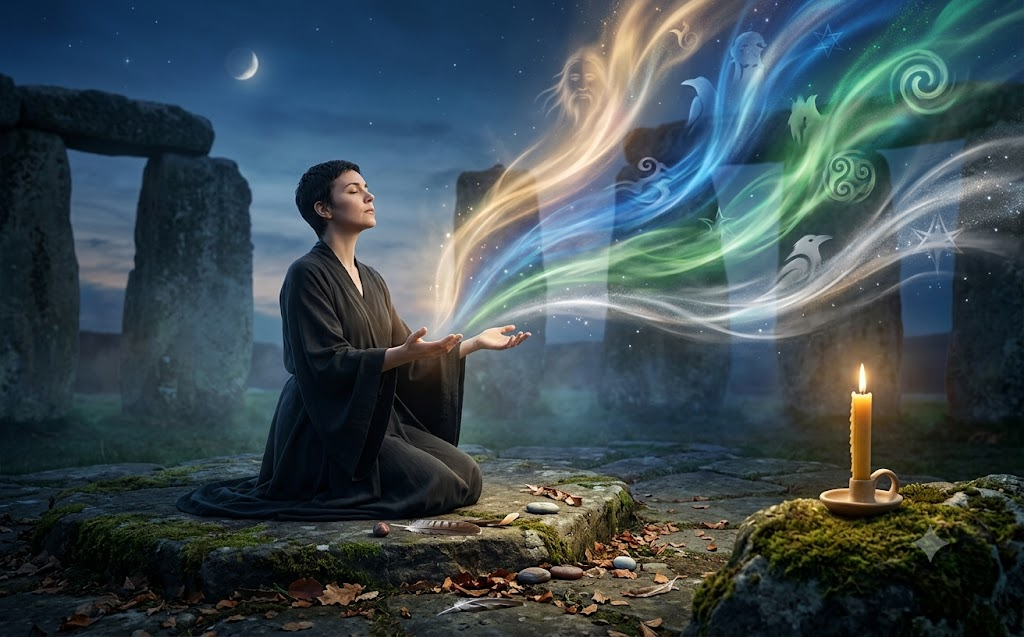
Magick for beginners can feel overwhelming with countless terms, traditions, and spells scattered across the web. For anyone stepping into this path, understanding foundational concepts like ritual practices and ethics provides a clear and grounded starting point.
Quick Tip for Beginners
Magic isn’t about supernatural miracles; it is the art of tuning into natural energies and directing your focused intention to create positive change.
Practitioners often explore Wiccan spells focused on healing, protection, love, fertility, money, or success. These positive practices are traditionally referred to as white magic. Conversely, black magic has been popular since ancient times, associated primarily with ultimate power, destruction, and taboo forces.
The Roots of Wicca
Understanding the historical and foundational roots of Wicca helps separate accurate facts from common misconceptions. Wicca is a modern pagan religion that honors both a god and a goddess—a balance comparable to the Taoist concept of yin and yang, or dual spiritual forces.
The Wiccan god is closely tied to nature, wilderness, hunting, and vitality, while the goddess holds a pre-eminent role in creation and energy work.
What is Magick?
Magick and spellcasting form a central part of traditional Wiccan practices, frequently referred to as witchcraft or sorcery. Magic is defined as the science and art of causing change through the natural energies of the universe. Within this tradition, magic operates as an inherent law of nature rather than a supernatural deviation.
If you want to clear mental noise before doing chart reads, try using a 2-minute sound ritual to center your focus.
Core Ethics and Guidelines
While there is no rigid dogma or single governing authority, virtually all Wiccan practitioners adhere to foundational ethical codes:
- The Wiccan Rede: Summarized by the maxim “an it harm none, do what ye will” (where “an” means “if”), this moral compass guides practitioners to weigh their actions carefully.
- The Law of Threefold Return: Similar to the concept of karma, this principle suggests that energy sent out into the world—whether positive or negative—returns to the sender with triple force over time.
The Five Elements
Unlike traditions recognizing only four standard elements, Wiccan practice honors five natural elements: Air, Fire, Water, Earth, and Aether (Spirit). Each point of the traditional pentagram symbolizes one of these elements, making the five-pointed star a sacred geometric shape in ritual work.
| Element | Direction | Key Associations |
|---|---|---|
| Earth | North | Stability, grounding, wealth, crystals, salt |
| Air | East | Intellect, communication, incense, feathers |
| Fire | South | Passion, transformation, energy, candles |
| Water | West | Emotions, intuition, healing, chalice, water bowls |
| Spirit (Aether) | Center | Divine connection, transformation, the soul |
Sacred Texts: The Book of Shadows
Unlike structured religions centered around a single holy scripture like the Bible or Quran, Wicca does not rely on a fixed doctrinal text. Instead, practitioners maintain a Book of Shadows—a personalized, evolving collection of spells, rituals, herbal guides, and notes that expands and changes throughout history.
Frequently Asked Questions About Magick for Beginners
What is the best way to start learning magick for beginners?
The best way to start is by building a strong foundation in personal meditation, energy awareness, and daily grounding practices. Rather than rushing into complex spellcasting, focus on understanding the four elemental forces, establishing ethical guidelines like the Wiccan Rede, and keeping a daily journal of your spiritual insights.
Do I need expensive tools or an elaborate altar to practice witchcraft?
No, elaborate tools are entirely optional. Many practitioners begin their journey using everyday household items—such as plain white candles, a bowl of tap water, salt from the kitchen, and a simple notebook for a Book of Shadows. True power stems from your focused intention and energy, not expensive ritual equipment.
✨ Quick Energy Shift ✨When you don’t have 45 minutes for full ritual setups, working with ancient sound frequencies delivers rapid vibrational grounding.
Is white magic safe for beginners?
Yes, positive or “white magic” practices focused on personal healing, peace, creativity, and protection are safe and well-suited for beginners. These practices emphasize working in harmony with natural energies and respecting the free will of others.
What is a Book of Shadows and how do I start one?
A Book of Shadows is a personal, sacred journal where a witch records rituals, spells, herbal correspondences, tarot notes, and personal reflections. To start your own, simply use a blank notebook or digital document that resonates with you, and update it as your practice evolves.