Magickal Correspondence Reference
Select an intention to view the traditional alignments.
When you make a purchase through links on our site, we may earn an affiliate commission. As an Amazon Associate I earn from qualifying purchases.
What Are Runes? An Introduction to Ancient Symbols and Magick
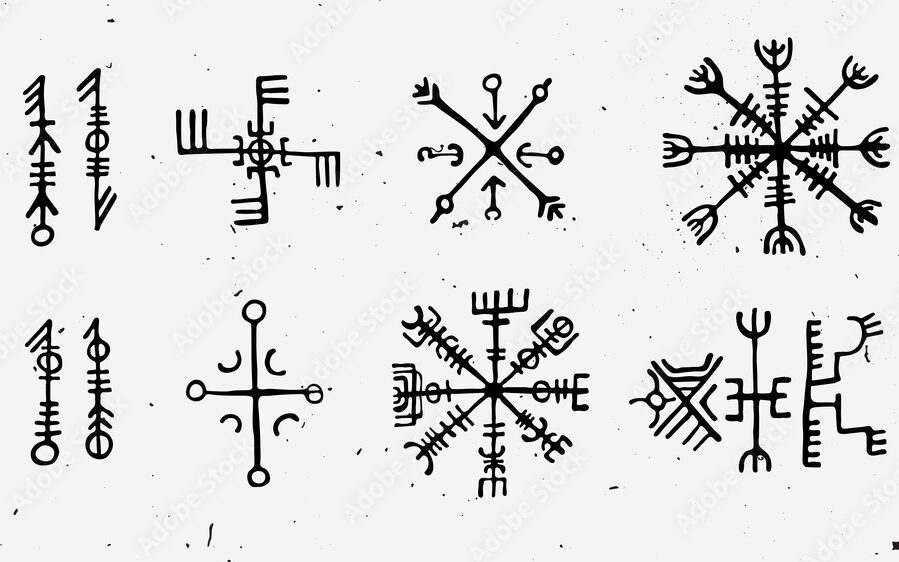
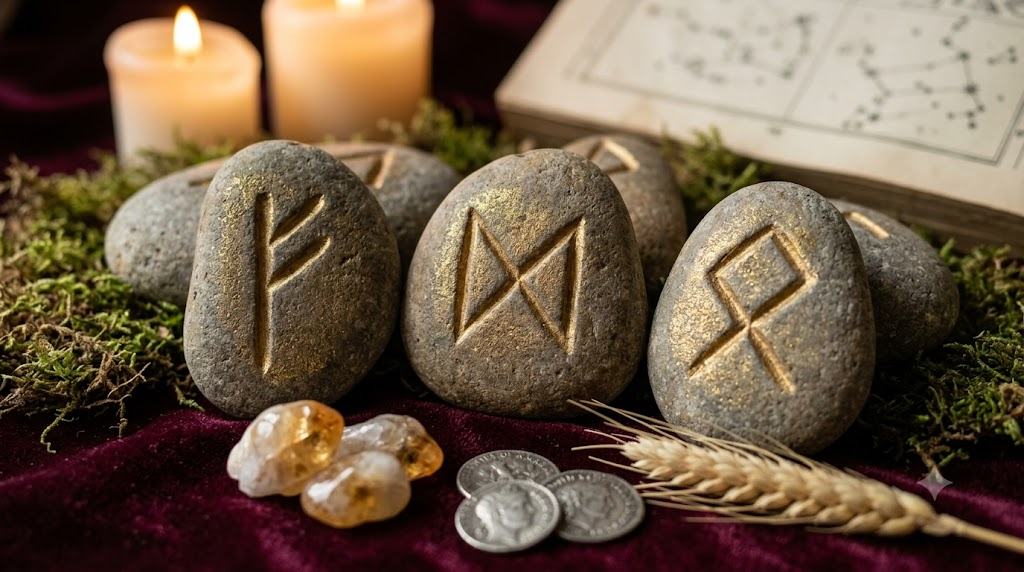
When exploring what are runes, it helps to understand that in the most mundane sense, they are an alphabet—much like our modern letters or ancient writing systems such as the Greek and Cyrillic alphabets. Each individual rune represents a distinct sound and was historically used to record language and write words.
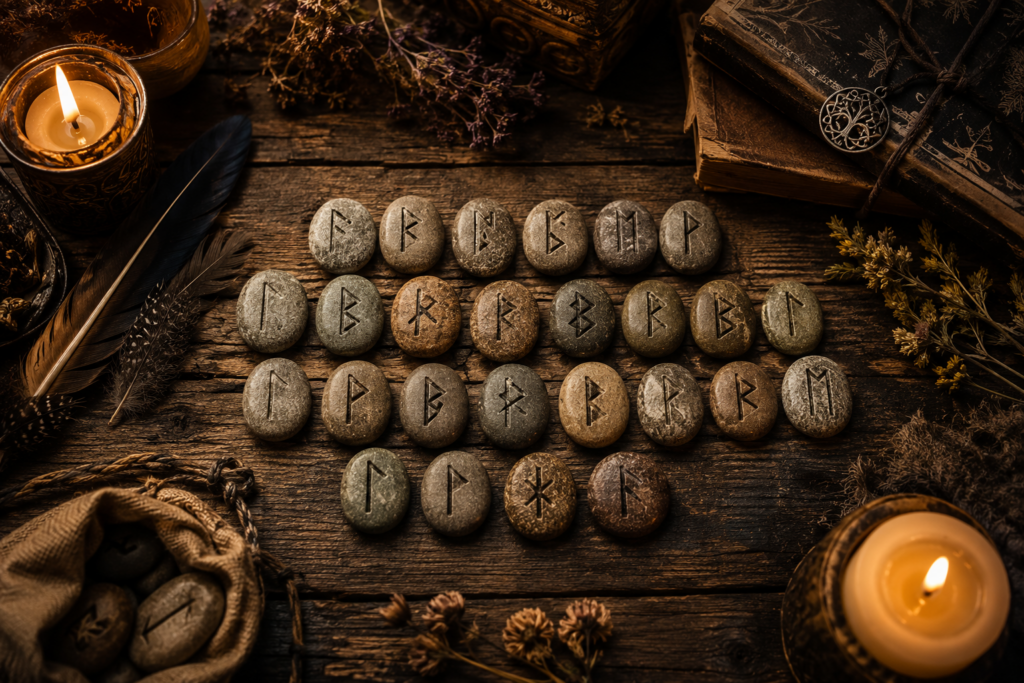
However, looking at them strictly as letters only scratches the surface.
| Feature | Quick Fact | Beginner Takeaway |
| Origin | Ancient Germanic & Norse cultures | Rooted in old northern European folklore and history. |
| Primary Alphabet | Elder Futhark (24 symbols) | The oldest and most widely studied runic set used today. |
| Core Structure | Divided into 3 groups (Aettir) | Represents a journey from raw creation to spiritual completion. |
| Traditional Use | Language & Sacred Carving | Originally used for both everyday writing and ritual magic. |
| Best Starting Point | Daily Rune Drawing | Pull one symbol each morning to meditate on its core energy. |
The Origins: Beyond Ordinary Writing
Runes were utilized long before traditional writing systems became widespread. In ancient Germanic and Norse traditions, these symbols were carved into stone, wood, metal, and bone not just to record daily speech, but to capture sacred, living forces.
Each rune functions as an archetype of a universal force. Historically, people developed names for massive, abstract concepts like Fire, Abundance, Protection, and Birth. To make these invisible natural energies easier to comprehend and work with, they were given specific names, sounds, and visual forms.

In this way, runes share a fascinating philosophical similarity with the Hebrew alphabet. Every “letter” not only carries a phonetic sound and a name, but also represents a complete concept packed with deep, multi-layered spiritual meaning.
The Elder Futhark: The Foundation of Runic Lore
When most modern practitioners and historians study runes, they focus on the Elder Futhark—the oldest known runic alphabet. Consisting of 24 distinct symbols, the Elder Futhark is traditionally divided into three groups of eight (known as Aettir).
Each of these three groups tells a symbolic story of spiritual development, moving from raw, foundational creation all the way to completion and transformation.
How to Begin Working with Runes Today
If you are looking to bring the power of runes into your modern spiritual practice, you don’t need an elaborate setup to begin. Here are a few simple ways to connect with them:
- Draw a Daily Rune: Pull a single rune each morning to meditate on its underlying energy as a daily theme or guide.
- Study the Meanings: Take time to learn the traditional folklore and esoteric correspondences behind each symbol rather than just memorizing their phonetic equivalents.
- Incorporate Them Into Spellwork: Carve specific runes into ritual candles or write them on parchment paper to align your intent with traditional folk magic.
FAQ: Exploring Runic Magic
Are runes hard for beginners to learn? Not at all! While there is a rich history to explore, beginners can easily start by learning a few key symbols and meditating on their meanings one by one.
How do runes differ from tarot cards? While both are powerful divination tools, tarot cards rely on detailed illustrative imagery and scenes, whereas runes are minimalist, geometric glyphs rooted in ancient alphabetic and phonetic magic.
Unlocking the Power of Ancient Runes
While runes began as an early communication tool for ancient Germanic and Norse peoples, their legacy extends far beyond a simple alphabet. As living archetypes of universal energy, they offer a profound bridge between history, divination, and modern spiritual practice. Whether you choose to draw a single daily rune for reflection or incorporate them into your daily ritual work, these sacred symbols remain a timeless, deeply personal tool for intuition and growth.