
When you make a purchase through links on our site, we may earn an affiliate commission. As an Amazon Associate I earn from qualifying purchases.
A Wicca Book of Shadows (BOS) is the central journal and reference manual for a practicing witch. It holds sacred texts, seasonal Sabbat rituals, spell records, and personal rules of magic. Creating a Book of Shadows allows practitioners to track magical progress, organize correspondences, and preserve personal spiritual traditions over time. Whether starting with a simple binder or a custom leather journal, building a grimoire provides a structured foundation for modern witchcraft.
What Is a Wicca Book of Shadows?
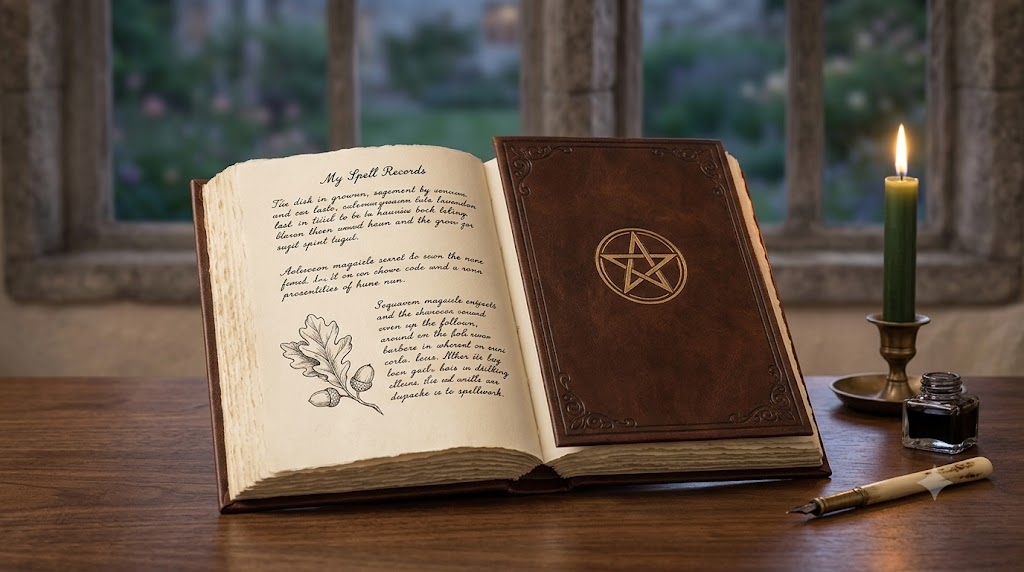
A Wicca Book of Shadows (BOS) is a personal grimoire, journal, and reference guide used by Wiccan practitioners to record spells, ritual structures, Sabbat celebrations, sacred texts, and personal rules of magic.
Whether you practice as a solitary witch or belong to an established coven, creating and maintaining a Book of Shadows remains one of the most practical and grounding aspects of modern witchcraft.
Core Elements of a Book of Shadows
While every practitioner customizes their book according to their personal journey, most well-rounded Books of Shadows feature five main sections:
- Sacred Texts & Ethics: Foundational readings including the Charge of the Goddess and the Wiccan Rede.
- Sabbat & Esbat Rituals: Detailed guides for celebrating the eight seasonal holidays and full/new moon gatherings.
- Spells & Correspondences: Cross-reference tables for herbs, crystals, candle colors, and moon phases.
- Divination Records: Log entries for tarot spreads, rune castings, and scrying sessions.
- Rules of Magic: Personal guidelines, ethical boundaries, and methods for raising power.
The 8 Sabbats at a Glance
Logging seasonal ritual outlines forms a significant portion of any Book of Shadows. Use this summary table as a quick reference for the Wheel of the Year:
| Sabbat | Date | Core Focus & Themes |
|---|---|---|
| Samhain | Oct 31 | Ancestor honor, final harvest, third harvest. |
| Yule | Dec 21–22 | Winter Solstice, rebirth of the Sun, hope. |
| Imbolc | Feb 1–2 | Purification, first signs of spring, Brigid. |
| Ostara | Mar 20–21 | Spring Equinox, balance, renewal, growth. |
| Beltane | May 1 | Fertility, passion, life blooming in nature. |
| Litha | Jun 20–22 | Summer Solstice, peak solar power, abundance. |
| Lughnasadh | Aug 1 | First grain harvest, gratitude, strength. |
| Mabon | Sep 21–24 | Autumn Equinox, second harvest, reflection. |
Historical Origins and Sacred Texts
Gerald Gardner, credited with founding modern Gardnerian Wicca, introduced the term Book of Shadows in the mid-20th century. His initial draft, titled Ye Bok of ye Art Magikal, provided the baseline structure for modern ritual recording.
Gardner framed the Book of Shadows as a flexible workbook rather than static scripture. Early covens often maintained a central text guarded by the High Priestess, with initiates hand-copying excerpts into personal journals, sometimes in cipher or secret magical alphabets.
Pro Tip: Spell Recording Checklist
When writing new working spells in your Book of Shadows, consistently include these four details to track efficacy over time:
- Timing & Phase: Date, exact time, moon phase, and active astrological placements.
- Tools & Ingredients: Specific candles, herbs, incense blends, or crystals used.
- Procedure: Step-by-step physical actions taken and spoken incantations.
- Follow-up Space: Leave 3–4 blank lines to record outcomes weeks or months later.
How to Cleanse and Consecrate Your Book of Shadows
Before writing in a new journal, many practitioners perform a brief cleansing or blessing ritual to dedicate the book to personal spiritual work:
- Smoke Cleansing: Pass the blank journal through the smoke of rosemary, sage, or cedar to clear lingering energies.
- Elemental Blessing: Lightly touch the cover with representations of the four elements (a drop of water, a pinch of salt, candle light, and incense smoke).
- Set an Intention: Hold the book and state a clear personal boundary or purpose, such as dedicating the pages to growth, learning, and safe practice.
Choosing a Format: Physical vs. Digital Grimoires
There is no single correct way to build a Book of Shadows. Selecting the right medium depends entirely on practical convenience and personal preference:
- Three-Ring Binders: Highly practical for beginners. Pages can be rearranged, added, or removed without damaging the book structure.
- Bound Leather or Cloth Journals: Traditional and tactile, making them ideal for long-term keepsakes, though they require careful planning since pages cannot be reordered.
- Digital Apps (Notion, GoodNotes, PDFs): Portable, searchable, and password-protected. Digital options allow for quick cross-referencing and photo additions.
Quick Reference: The 5 Essential Book of Shadows Sections


1. Sacred Texts & Ethics
Holds foundational philosophical readings, including the Wiccan Rede and the Charge of the Goddess. This section establishes moral boundaries, personal codes of conduct, and core spiritual vows.
2. Sabbat & Esbat Outlines
Contains step-by-step procedures for the eight seasonal Wheel of the Year holidays (Sabbats) and monthly moon gatherings (Esbats). Standard details feature altar setups, deity invocations, and seasonal chants.
3. Spells & Correspondences
Functions as a practical reference database for working materials. Key entries include cross-reference tables for botanical properties, crystal associations, candle colors, planetary hours, and lunar phases.
4. Divination Records
Serves as a structured journal for tarot spreads, rune castings, scrying sessions, and dream analysis. Logging exact dates and interpretations helps track intuitive development and accuracy over time.
5. Rules of Magic & Outcome Tracking
Outlines methods for raising, directing, and grounding energy. Dedicated follow-up spaces allow for logging observed results and refining techniques weeks or months after execution.
Frequently Asked Questions
Is a Book of Shadows the same as a Grimoire?
While the terms are often used interchangeably, a grimoire is a general textbook of magic and correspondences. A Book of Shadows is specifically tied to Wiccan traditions and usually includes personal journals, spiritual reflections, and ethical guidelines alongside magic workings.
Can anyone else read your Book of Shadows?
Historically, coven books were kept secret from outsiders. Modern solitary practitioners decide their own boundaries; some keep their books entirely private, while others share family or coven traditions with trusted fellow witches.
What happens if you make a mistake on a page?
Mistakes are a natural part of a working journal. Cross out errors cleanly, paste decorative paper over the section, or leave it as a record of learning. A Book of Shadows is meant to be a living, evolving workbook rather than a flawless display piece.